07
Measured nutrients
Seven vitamins and minerals are listed with individual amounts in the available label transcription.
Explore the formula, key ingredients, label information, package options, and important considerations behind RetinaClear. A clear, balanced guide to help you understand the product before making a decision.
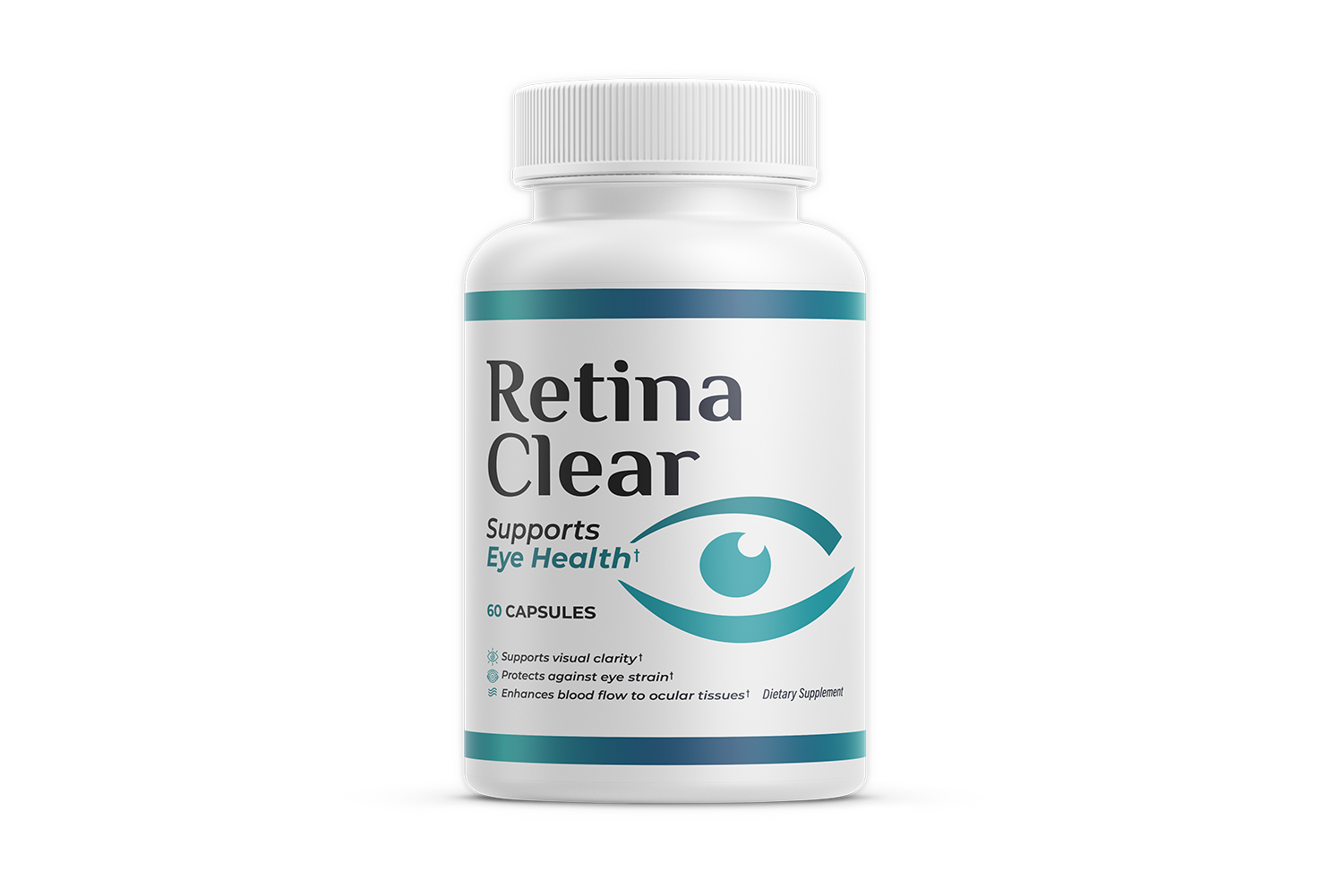
RetinaClear is marketed as a dietary supplement for general eye-health support. Its available formula information combines seven individually measured nutrients with a fourteen-ingredient proprietary blend. This page explains what is disclosed, what remains unclear, and what to verify on the current product label.
Seven vitamins and minerals are listed with individual amounts in the available label transcription.
Fourteen additional ingredients are grouped into one proprietary blend in the available label details.
The transcription lists a combined blend weight, not a separate dose for each botanical or antioxidant.
RetinaClear is presented in capsule form and combines familiar vitamins and minerals with botanical ingredients commonly discussed in eye-nutrition research. The product is intended as a supplement, not a treatment for an eye condition.
Always confirm the current serving size and capsule count on the bottle you receive. Available product descriptions do not always use identical serving details, so the physical Supplement Facts panel is the best place to verify the current information.
SEE PACKAGE DETAILS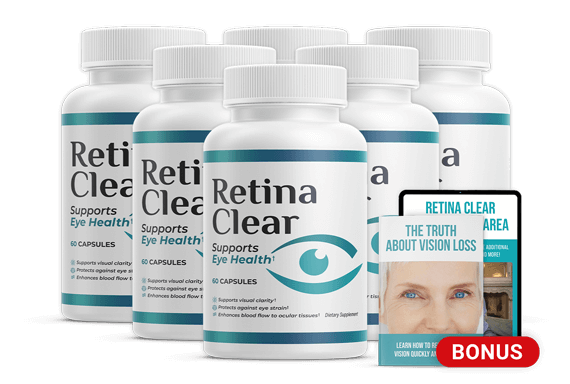
The available label transcription identifies seven nutrients with amounts and fourteen additional ingredients inside a combined proprietary blend. Ingredient presence alone does not establish a clinical effect or reveal the amount of each blend component.
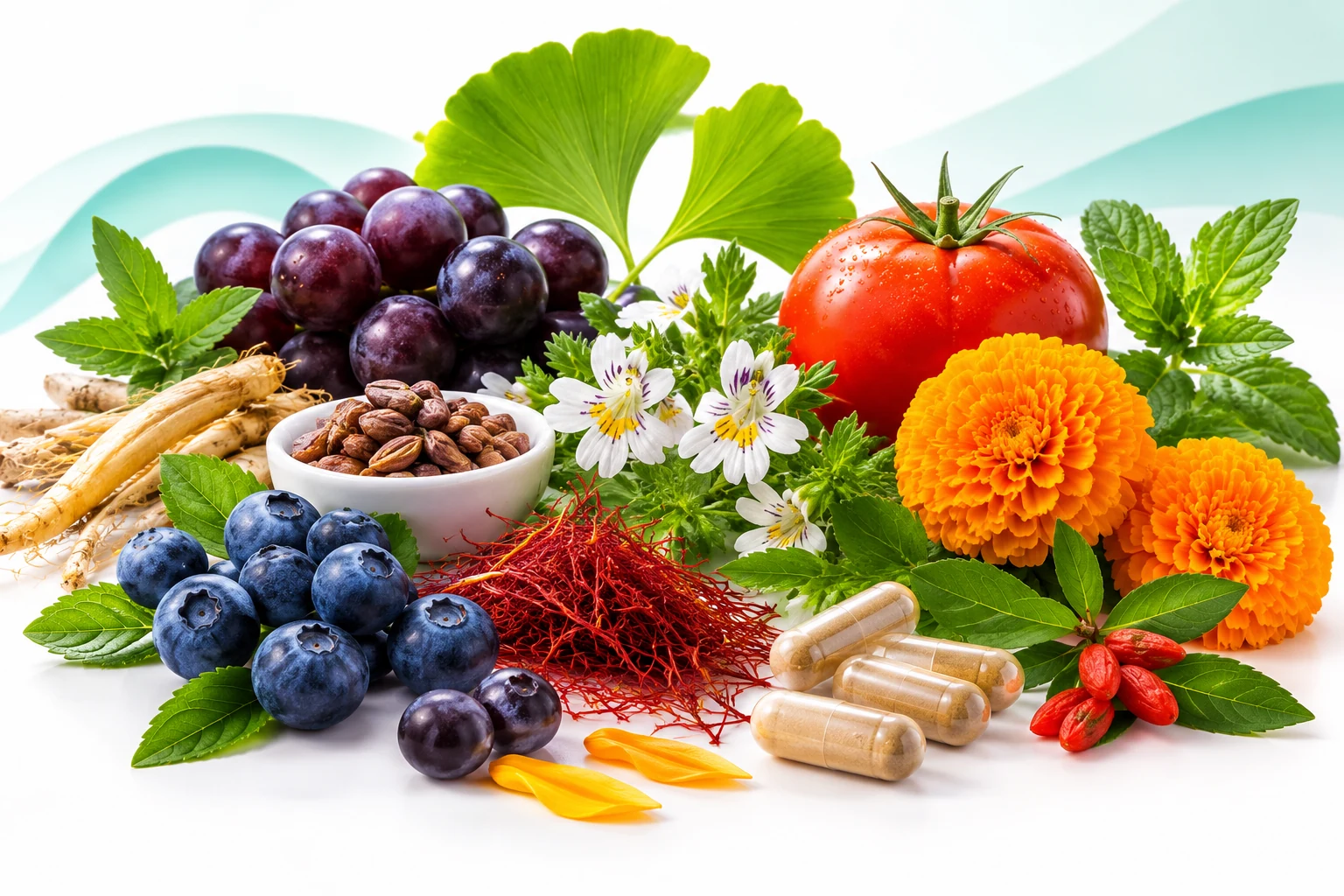
The formula information brings together vitamins and minerals with plant extracts and antioxidant compounds. The ingredient image offers a visual introduction to some of the botanical and food-derived ingredients named in the available label transcription.
Seven nutrients have individual amounts listed. The other fourteen ingredients are grouped into one 351 mg proprietary blend, so their separate quantities are not available in the transcription.
| Ingredient | Amount per serving in available transcription |
|---|---|
| Vitamin A (as beta-carotene) | 450 mcg RAE |
| Vitamin C | 90 mg |
| Vitamin E | 15 mg |
| Zinc | 11 mg |
| Selenium | 20 mcg |
| Copper | 0.9 mg |
| Chromium | 15 mcg |
| 14-ingredient proprietary blend | 351 mg total |
Some ingredients in RetinaClear are discussed in nutrition research, but studies of individual nutrients do not prove that the finished RetinaClear formula produces the same results. Research depends on the dose, formulation, population, and outcome being studied.
If you have an eye condition or take medication, speak with your eye-care professional or pharmacist before using a supplement. Never use a supplement to delay diagnosis or replace prescribed care.
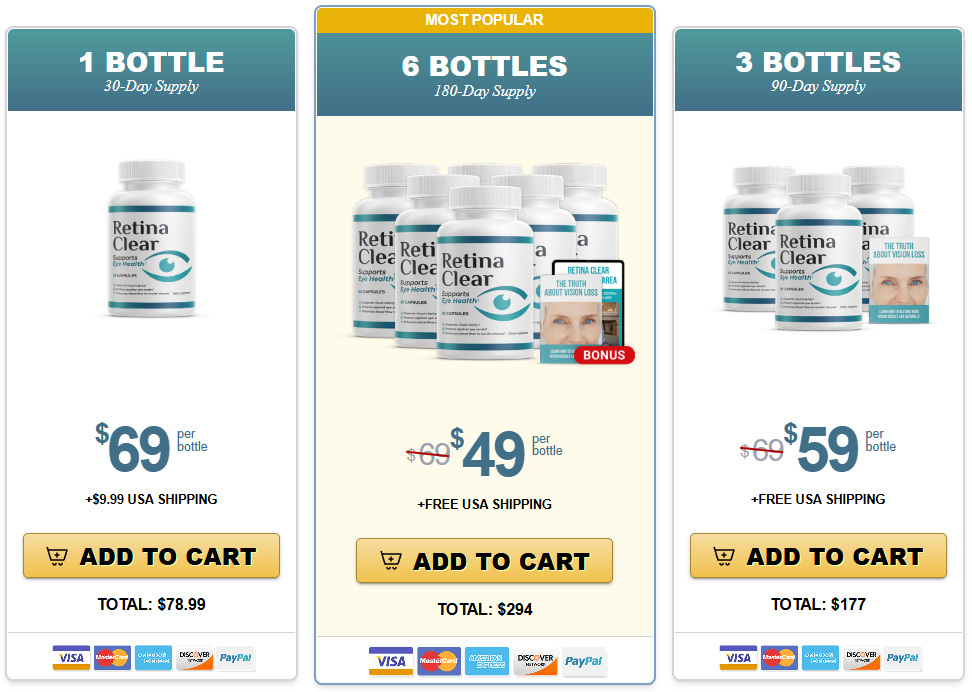
The reference sales page displays the following promotional package prices. Offers, shipping terms, and availability may change. Confirm the final total on the checkout page before paying.
Prices shown are based on the supplied reference page and are not a guarantee of current availability.
The reference website advertises a 60-day money-back guarantee. Read the current refund policy for the exact return window, eligibility requirements, return shipping responsibility, and refund process before ordering.
VIEW OFFICIAL OFFERRetinaClear is presented as a daily dietary supplement designed for adults who want to pay attention to their general eye-health routine. Its formula combines vitamins and minerals with botanical ingredients and antioxidants commonly discussed in the context of vision-support nutrition. This review-style page brings the available product information together in one place so readers can understand what the product is, what its ingredient list says, what the package options cost, and which questions are worth asking before placing an order.
Eye health is influenced by many factors, including age, family history, existing medical conditions, nutrition, medication use, screen habits, sunlight exposure, and regular professional care. A supplement should be considered only one possible part of a wider wellness routine. It cannot replace an eye examination, prescribed treatment, or advice from an optometrist or ophthalmologist. People who notice a sudden change in vision should seek urgent medical assessment rather than waiting to see whether a supplement makes a difference.
The purpose of this page is to provide a clear, balanced overview rather than promise a particular result. Product descriptions and promotional statements are not the same as proof that a finished formula has been tested in a clinical trial. Where ingredient amounts are available, they are identified as label information. Where individual amounts are not disclosed, that limitation is explained so readers can make a more informed decision.
RetinaClear is marketed as an eye-health and vision-support dietary supplement in capsule form. The supplied product materials describe a combination of seven individually measured vitamins and minerals plus a proprietary blend containing fourteen additional ingredients. The product bottle artwork supplied for this website identifies the product as a dietary supplement and displays a 60-capsule count. The package images and sales-page details should always be checked at the point of purchase because packaging, serving directions, and offers can change.
The formula includes nutrients such as vitamins A, C, and E, zinc, selenium, copper, and chromium. Its proprietary blend lists taurine, ginkgo biloba, eyebright, grape seed extract, coleus forskohlii, alpha-lipoic acid, rutin, quercetin, bilberry, saffron, lycopene, lutein, zeaxanthin, and astaxanthin. These ingredients belong to different nutritional and botanical categories. Their presence on a list does not establish that each ingredient is present at a clinically meaningful dose or that the complete product produces a specific outcome.
For shoppers, the most useful first step is to read the actual Supplement Facts panel on the bottle they receive. Check the serving size, number of servings, ingredient forms, amounts, other ingredients, allergen statements, warnings, and directions. If the physical label differs from information on a website, use the label and ask the seller or a qualified healthcare professional to clarify the discrepancy before taking the product.
The product information describes two broad parts of the formula. The first part contains seven nutrients with individual quantities. The second part is a combined proprietary blend with a total stated weight of 351 mg in the label transcription available in the research material. A proprietary blend can be useful to understand as a list of included ingredients, but it gives less detail than a fully quantified formula because the individual amount of each component is not shown.
That distinction matters when comparing products. If a nutrient is listed with a specific amount, readers can compare that amount with dietary reference information or with amounts used in published studies, while still remembering that research results depend on population, formulation, and study design. If a group of ingredients is presented as one combined weight, a reader cannot calculate how much lutein, zeaxanthin, bilberry, or any other individual component is present. It is not appropriate to assume that every ingredient is included at the amount used in a study.
A careful review therefore considers both the ingredient names and the transparency of the label. The presence of familiar ingredients may make a formula interesting, but a complete evaluation also asks whether doses are disclosed, whether the finished product has been studied, whether the directions are clear, and whether the product is appropriate for the individual considering it.
Lutein is a carotenoid found in leafy green vegetables and other foods. It is present in the macula, a region of the retina involved in central vision. Lutein is often discussed alongside zeaxanthin in research on eye nutrition. The fact that lutein appears in a supplement does not tell the reader how much is supplied, particularly when it is included within a proprietary blend. Check the product label for an individually stated amount before making a dose comparison.
Zeaxanthin is another carotenoid associated with the macula. It is commonly considered together with lutein in nutritional research. Food sources include colorful vegetables and other plant foods. In a supplement review, the important questions are whether the amount is disclosed, whether the formula is consistent with the research being referenced, and whether a healthcare professional has advised supplementation for the individual.
Bilberry extract contains naturally occurring anthocyanins and is frequently marketed in products for eye wellness. Research into bilberry and vision-related outcomes varies by study and does not automatically establish the effectiveness of every bilberry-containing supplement. Extract standardization, source material, amount, and study quality all matter when interpreting claims.
Quercetin is a plant flavonoid found in foods such as onions, apples, and other fruits and vegetables. It is studied for antioxidant and other biological properties. Its presence in a proprietary blend does not establish a specific effect on eyesight or circulation in people taking this product. People using prescription medicines should ask a pharmacist or clinician about possible interactions before adding concentrated botanical supplements.
Vitamin A contributes to normal visual function and is especially important for vision in low-light conditions. The supplied label transcription identifies vitamin A as beta-carotene. Beta-carotene supplements require particular caution for people who smoke or formerly smoked; they should discuss use with a healthcare professional rather than relying on general marketing copy. Vitamin A intake from all sources should be considered, especially when using multiple supplements.
Vitamin C is an essential nutrient with antioxidant functions and roles in normal tissue maintenance. It is found in fruits and vegetables such as citrus, berries, peppers, and broccoli. Vitamin E is a fat-soluble antioxidant nutrient. Zinc contributes to normal immune function and many enzyme processes, including processes relevant to normal vision. Selenium, copper, and chromium also have recognized roles in human nutrition. The presence of these nutrients does not mean that more is always better; excessive intake can be harmful.
The label transcription available for this review lists vitamin A as beta-carotene at 450 micrograms RAE, vitamin C at 90 milligrams, vitamin E at 15 milligrams, zinc at 11 milligrams, selenium at 20 micrograms, copper at 0.9 milligrams, and chromium at 15 micrograms per serving. It also lists a 351 mg proprietary blend of fourteen ingredients. These figures should be checked against the current physical packaging because product labels can be updated and different listings may describe different versions.
The key transparency limitation is that the fourteen ingredients in the proprietary blend are not individually quantified in the transcription. As a result, a shopper cannot determine the exact amount of lutein, zeaxanthin, bilberry, saffron, or the other blend ingredients from the combined total alone. This is a factual limitation of the available label information, not proof that the product is ineffective. It simply means that ingredient-by-ingredient dose comparisons are not possible from the blend total.
When assessing a supplement, it is reasonable to ask the seller for a current Supplement Facts image, serving-size clarification, manufacturing and quality documentation, and details of the return policy. If those details are not clear, pause before ordering. A trustworthy purchase decision should not depend on urgency language, an impressive ingredient count, or a headline rating that cannot be independently checked.
RetinaClear is promoted for general eye-health support. The product page discusses visual clarity, retinal and macular health, everyday eye comfort, and antioxidant support. These are marketing themes associated with the category. They should not be interpreted as guarantees that the supplement will sharpen eyesight, reverse vision changes, prevent eye disease, or relieve a diagnosed condition.
A balanced approach to eye wellness starts with routine eye examinations and prompt attention to new symptoms. A professional can assess vision, eye pressure, retinal health, medication effects, and other factors that a supplement website cannot evaluate. A nutrient-rich eating pattern, adequate sleep, appropriate lighting, protective eyewear when needed, and regular breaks during extended near work can also support general wellbeing.
For people who spend long periods using computers or phones, comfort habits may be useful: position screens at a comfortable distance, adjust brightness and text size, reduce glare, blink regularly, and take periodic breaks to look away from the screen. Persistent dryness, pain, headaches, double vision, or blurred vision should be discussed with an eye-care professional. These symptoms should not automatically be attributed to screen fatigue.
Nutrition research often studies individual nutrients or specific combinations in defined populations. Results from one study cannot automatically be transferred to a different supplement with different ingredients, doses, manufacturing methods, or serving instructions. The AREDS and AREDS2 research programs, for example, examined particular nutrient combinations in people with specific stages of age-related macular degeneration. Those study formulas are not interchangeable with every product marketed for eye support.
If a product mentions lutein, zeaxanthin, zinc, or antioxidants, readers should distinguish between research on those ingredients and research on the finished product. The existence of published research on an ingredient does not prove that RetinaClear itself has been clinically tested or that it provides the same dose used in a trial. No claim about a finished product should be inferred unless a well-designed study has actually tested that product or an equivalent formulation.
People with diagnosed eye conditions should ask their ophthalmologist whether any supplement is appropriate. Some eye conditions require monitoring, prescription medication, procedures, or other evidence-based treatment. A supplement should never be used to delay diagnosis or replace a recommended treatment plan.
Follow the current directions printed on the product packaging and do not exceed the recommended serving. The reference sales page and third-party label transcriptions have not always described serving instructions consistently, so this website does not guess a dose. Confirm the serving size on the bottle you receive and contact the seller if the packaging and order page disagree. Take the product only as directed by the current label and a healthcare professional.
Ask a doctor or pharmacist before use if you take prescription medicines, use blood-thinning or antiplatelet medication, manage blood sugar, have a seizure disorder, have a planned surgery, are pregnant or nursing, or have a diagnosed medical condition. Botanical ingredients such as ginkgo and other concentrated extracts may interact with medicines or affect bleeding risk. Chromium, alpha-lipoic acid, and some botanical ingredients may also be relevant to blood-glucose management.
Beta-carotene supplementation is a specific consideration for current and former smokers. Large trials have raised concerns about beta-carotene supplements in these groups. Anyone who smokes or used to smoke should consult a healthcare professional before using a beta-carotene-containing supplement. Do not assume that a lower amount makes the question irrelevant to your personal circumstances.
Stop using the product and seek professional advice if you experience an unexpected reaction. Keep supplements out of reach of children, store them according to the label, and check the expiry date and seal when a package arrives. If the bottle is damaged, the seal is broken, or the label is missing, contact the seller before use.
One practical advantage of the product is that it brings several nutrients and botanical ingredients into a single capsule-based supplement. For adults who already understand their nutritional needs and have checked the label with a healthcare professional, a combined product may be convenient compared with purchasing several separate supplements. The capsule format may also be easier for some people to incorporate into an established routine.
The ingredient list includes nutrients and plant compounds that are commonly discussed in eye-health nutrition. The package options provide a choice between a single bottle and larger multi-bottle purchases. The sales page advertises free shipping on the three- and six-bottle packages and a money-back guarantee. These are seller-stated terms and should be confirmed at checkout, including the exact refund period, return address, eligibility rules, and any shipping costs.
There are also important considerations. The proprietary blend does not disclose the individual amounts of its fourteen components in the available label transcription. The supplied source materials contain different bottle-count and serving descriptions, so the current physical label should be checked. A product-specific clinical trial was not established by the materials reviewed for this page. Premium multi-bottle purchases may also represent a larger upfront expense than a one-bottle order.
The best decision depends on personal health circumstances, the label, the price at checkout, and the buyer's comfort with the available information. It is reasonable to decide that the product is not suitable if the ingredient amounts, return terms, or safety details do not meet your expectations.
The reference sales page lists three package options: one bottle for $69 plus a $9.99 shipping fee, three bottles for $177 with free shipping, and six bottles for $294 with free shipping. On that displayed offer, the listed per-bottle amounts are $69, $59, and $49 respectively. The six-bottle package has the lowest displayed price per bottle, while the single-bottle option requires a smaller initial commitment. Prices, availability, taxes, shipping destinations, and promotional terms can change without notice.
Before completing a purchase, check the final checkout total rather than relying only on a promotional banner. Confirm the number of bottles, shipping fee, applicable taxes, currency, delivery estimate, payment method, and whether the order is a one-time purchase. The sales page states that the purchase is a one-time payment, but buyers should verify the order summary and terms displayed by the payment processor before submitting payment.
For a multi-bottle package, consider the amount you can reasonably use before the expiry date and whether the product is appropriate for you. Buying a larger supply solely because the per-bottle price is lower may not be the right choice if you have not reviewed the label, discussed interactions, or tried the product. A discount does not replace a careful health and budget decision.
The reference website advertises a 60-day money-back guarantee. It describes a refund promise for customers who are not satisfied and says returned bottles may be accepted even when empty. Because refund policies can have conditions, read the current policy before ordering. Confirm when the 60-day period begins, whether all bottles must be returned, who pays return shipping, how to obtain authorization, and how long refunds typically take.
Keep the order confirmation, receipt, package information, and any communication with customer support. If a refund is needed, follow the official instructions and retain proof of shipment. A guarantee is a seller policy, not a medical assurance that a product will work for every person. It is also not a substitute for checking the seller's current terms before payment.
If you have questions about an order, use the contact details shown on the official checkout or seller policy pages. Avoid sending sensitive payment details by email or through unofficial social media accounts. Use the payment processor's secure checkout and review the final order summary before authorizing the transaction.
RetinaClear may interest adults who are researching nutritional supplements for general eye wellness and want to compare a multi-ingredient formula with other options. It may also interest shoppers who prefer a capsule format and want to review package pricing before deciding. This does not mean the product is suitable for every adult. Individual health history, current medicines, dietary intake, and eye-care needs should guide the decision.
People with a diagnosed eye condition should speak with their eye-care professional before starting a supplement. People taking prescription medication, people with a history of medication sensitivity, and people who are pregnant or nursing should also seek professional guidance. A pharmacist can help review potential interactions, while an ophthalmologist or optometrist can explain whether a particular nutritional approach is relevant to a person's eye health.
Anyone expecting a supplement to restore lost vision, remove cataracts, treat glaucoma, reverse macular degeneration, or replace prescribed treatment should not rely on this product. Those expectations go beyond what a dietary supplement can be represented as doing. If a seller's claim sounds like a promise to treat or cure a disease, look for independent medical advice and reliable evidence before proceeding.
First, confirm that you are on the seller's intended website and that the checkout page uses a secure connection. Check the product name, bottle image, capsule count, serving size, ingredient list, and current Supplement Facts panel. Compare the label information with the claims on the product page and ask for clarification if any detail differs. A correct product name and matching image are useful, but they do not replace a complete label review.
Second, review the package details carefully. Confirm the number of bottles, total price, price per bottle, shipping charge, delivery destination, and whether any bonuses are included. Make sure you understand whether the displayed price is a limited-time promotion and whether the checkout total changes after taxes or shipping are calculated. Do not assume a free-shipping offer applies to every country or region.
Third, read the return policy and customer support information. Confirm the refund window, return procedure, eligibility requirements, and any costs. Save a copy of the terms available on the day you purchase. If the terms are difficult to find or unclear, contact customer support before paying.
Finally, consider whether the supplement is appropriate for your circumstances. Check for interactions, smoking-related beta-carotene cautions, pregnancy or nursing considerations, and any medical advice relevant to you. If you are unsure, ask a qualified healthcare professional. A well-informed decision is more valuable than making a quick purchase because of a countdown timer or discount headline.
A supplement is only one small part of an overall approach to wellbeing. Eating a varied diet that includes vegetables, fruits, whole grains, legumes, nuts, and sources of healthy fats can help provide a broad range of nutrients. Dark leafy greens and colorful produce contribute carotenoids and other plant compounds. A balanced diet is not a guarantee against eye disease, but it is a sensible foundation for general health.
Protective habits matter too. Wear sunglasses that provide appropriate ultraviolet protection when outdoors, use safety eyewear for activities that create a risk of eye injury, and follow workplace guidance when working with tools or chemicals. Keep contact lenses clean and follow the schedule provided by your eye-care professional. Avoid sleeping in contact lenses unless specifically instructed by a clinician.
For digital work, use comfortable screen settings and take breaks from sustained close-up tasks. People often find it helpful to look at a distant object periodically, blink fully, and adjust screen height to reduce discomfort. If symptoms continue despite changes to the work environment, arrange an eye examination rather than assuming that a supplement is the answer.
Routine eye examinations can identify problems before noticeable symptoms develop. The appropriate frequency depends on age, health history, risk factors, and professional advice. People with diabetes, high blood pressure, a family history of eye disease, or existing eye conditions may need a personalized schedule. Follow the advice of your eye-care provider.
What is RetinaClear? RetinaClear is marketed as a dietary supplement for general eye-health support. The available product information describes seven measured nutrients and a fourteen-ingredient proprietary blend. It is not a medicine and should not be used to diagnose, treat, cure, or prevent an eye disease.
What ingredients are listed? The available label transcription lists vitamins A, C, and E, zinc, selenium, copper, and chromium, alongside taurine, ginkgo biloba, eyebright, grape seed extract, coleus forskohlii, alpha-lipoic acid, rutin, quercetin, bilberry, saffron, lycopene, lutein, zeaxanthin, and astaxanthin. Confirm the current bottle label because formulations can change.
Are the amounts of all ingredients disclosed? No. The available transcription gives individual amounts for seven nutrients and a combined 351 mg total for the fourteen-ingredient proprietary blend. It does not give the separate amount of each blend ingredient. Check the current Supplement Facts panel for any update.
How many capsules should I take? Follow the directions on the current product label. The reference page and other available descriptions do not consistently state the serving instructions, so this review does not prescribe a dose. Ask the seller to clarify any discrepancy and consult a healthcare professional if you take medication or have a medical condition.
How many capsules are in a bottle? The supplied bottle artwork displays 60 capsules, while some other available descriptions refer to a 30-serving bottle. Confirm the current package count and serving size from the actual label before calculating how long a bottle will last.
How much does RetinaClear cost? The reference page displays $69 for one bottle plus $9.99 shipping, $177 for three bottles with free shipping, and $294 for six bottles with free shipping. Offers can change. Confirm the final amount at checkout.
Is shipping free? The reference page advertises free shipping for the three- and six-bottle packages. The single-bottle option displays a shipping fee. Confirm the destination and final checkout details because shipping terms can change.
Does RetinaClear offer a money-back guarantee? The reference website advertises a 60-day money-back guarantee. Read the current policy for the start date, return requirements, shipping costs, and refund procedure before placing an order.
Can RetinaClear treat glaucoma or macular degeneration? No dietary supplement should be relied on to treat these diagnosed conditions. Seek care from an eye-care professional and follow an evidence-based treatment plan.
Can smokers use RetinaClear? The available label transcription lists vitamin A as beta-carotene. Current and former smokers should speak with a healthcare professional before taking beta-carotene supplements because of safety concerns identified in large trials.
Can I take RetinaClear with medication? Ask a doctor or pharmacist first. Some ingredients in the formula may interact with medicines or be relevant to bleeding risk, blood sugar, or other health considerations. Provide the full ingredient list and your medication list to the professional reviewing it.
Is RetinaClear suitable during pregnancy or breastfeeding? Do not assume that it is. Consult your healthcare professional before using any supplement during pregnancy or while nursing.
How long does it take to notice a difference? The materials reviewed do not establish a reliable timeline for results. Individual experiences can vary, and the finished formula has not been shown here to produce a guaranteed outcome. Do not delay medical care while waiting for a supplement effect.
Where should I buy RetinaClear? Use the seller's official purchase route linked from the reference website and check that the checkout details match the offer you intend to buy. Verify the final price, shipping, and refund terms before payment.
Is RetinaClear a replacement for an eye exam? No. Supplements cannot measure vision, examine the retina, check eye pressure, or diagnose disease. Maintain regular eye care and seek urgent help for sudden or severe symptoms.
Sudden vision loss, a dark curtain or shadow across the field of vision, a sudden increase in floaters or flashes, new double vision, severe eye pain, or a red painful eye can signal a time-sensitive medical problem. Seek urgent medical attention. Do not wait for a supplement, home remedy, or routine appointment to address sudden changes.
Persistent blurred vision, difficulty seeing at night, recurring headaches associated with visual tasks, ongoing dryness, or changes in color perception should be discussed with an eye-care professional. These symptoms can have many causes and cannot be diagnosed from a product page. A proper assessment is the safest way to understand what is happening and what care may be needed.
RetinaClear is a multi-ingredient supplement marketed for general eye-health support. The available information describes seven nutrients with individual amounts and a fourteen-ingredient proprietary blend. The product page also advertises three package options and a 60-day money-back guarantee. Those details may help shoppers understand the offer, but they do not establish that the finished product will improve vision or treat an eye condition.
The main point to weigh is transparency. The available label transcription does not disclose the individual amounts of the fourteen ingredients in the proprietary blend, and serving information should be confirmed against the current bottle. Readers should also consider the beta-carotene caution for current and former smokers and ask a healthcare professional about possible interactions with medicines.
If you decide to explore the product, review the current label, compare the final checkout price, understand the refund terms, and discuss suitability with a qualified professional when appropriate. If the information does not answer your questions, it is reasonable to wait or choose a product with clearer labeling. Your eye health deserves careful decisions, regular professional care, and realistic expectations.
Use the product artwork as a visual reference, then confirm the bottle count and current label details when you visit the seller's checkout.
RetinaClear is marketed as a dietary supplement for general eye-health support. The available information describes seven measured nutrients and a fourteen-ingredient proprietary blend.
No. The available transcription gives individual amounts for seven nutrients and a combined 351 mg total for the fourteen-ingredient blend, but not separate amounts for each blend ingredient.
Follow the current product label. Confirm the serving size on the bottle because available product descriptions are not fully consistent.
No. Do not rely on a dietary supplement to treat an eye disease. Consult an eye-care professional for diagnosis and treatment.
The reference page displays $69 for one bottle plus shipping, $177 for three bottles, and $294 for six bottles. Confirm current pricing and shipping at checkout.
The reference page advertises a 60-day money-back guarantee. Read the current terms to understand eligibility and return requirements.
Ask your doctor or pharmacist first. Several botanical ingredients may be relevant to medicine interactions and health conditions.
Check the current label, package information, checkout total, and refund terms before deciding whether this supplement is right for you.
VISIT THE OFFICIAL ORDER PAGE